New installation or relocation
Verify performance after placement, connection to building systems or major service.

Laboratory fume hood testing, including ASHRAE 110 methods within the agreed scope.
Discuss This ServiceLaboratory containment equipment protects people, products or the surrounding environment only when the device and its supporting ventilation system perform together. Face velocity alone does not tell the whole story. Room air movement, sash position, cross-drafts, exhaust response, filter integrity and equipment condition can all influence containment.
Micron defines the test approach around the equipment type, its use and the owner’s acceptance criteria. Results are documented clearly so laboratory, safety and facility teams understand both the measured performance and any conditions that may affect it.
Final methods and acceptance criteria depend on your facility, equipment, operating state and applicable requirements.
Understanding the surrounding system helps prevent a test result from being interpreted without the context needed to correct it.
Verify performance after placement, connection to building systems or major service.
Confirm continued performance at the interval established by the owner or applicable program.
Evaluate how changes to supply air, exhaust, doors or nearby equipment affect containment.
Before the visit, we align the report contents with the people who will review it. This reduces ambiguity about tested conditions, acceptance criteria, deficiencies and retest status.
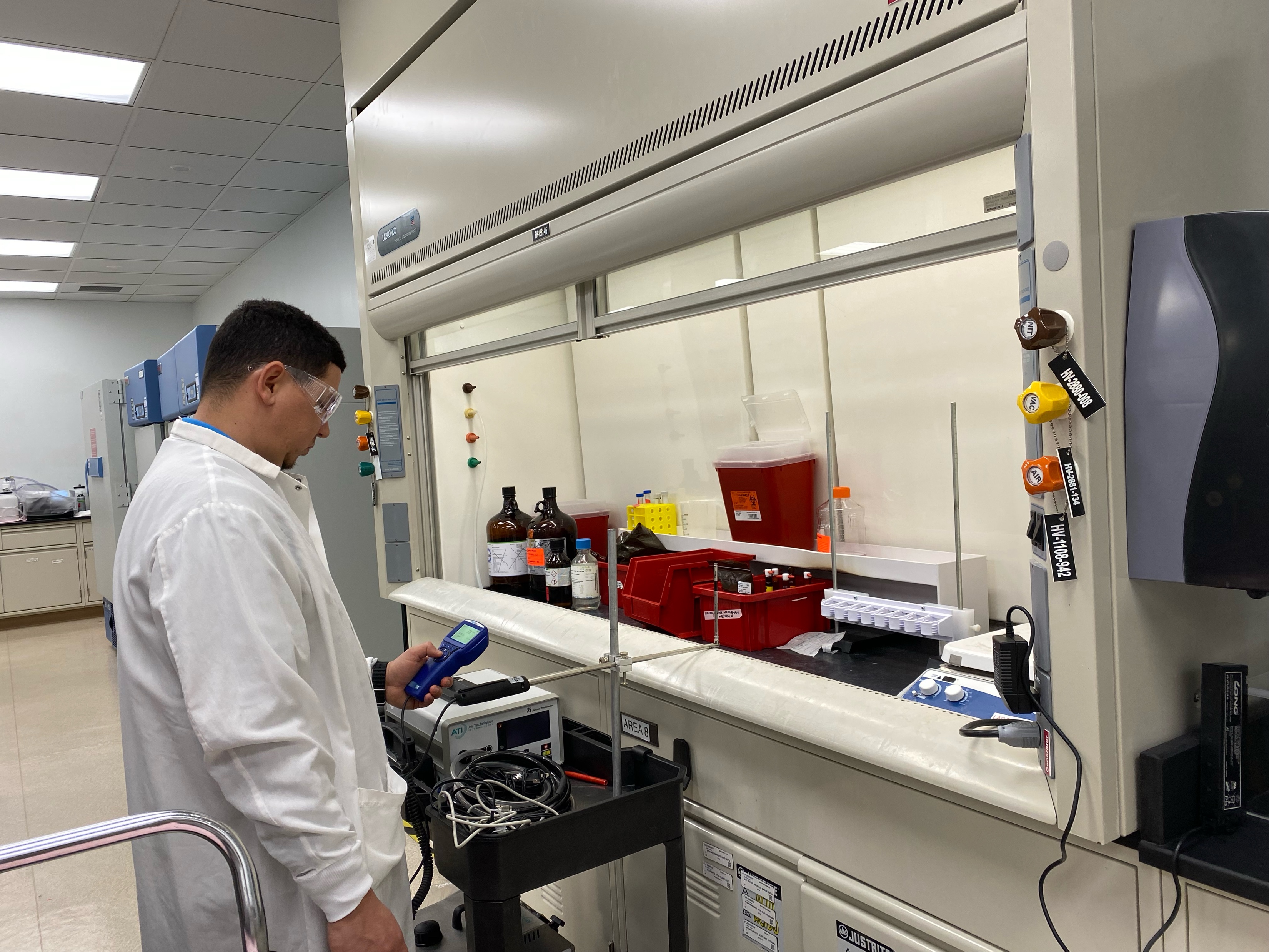
Not necessarily. A complete program may include inspection, airflow visualization, face velocity and tracer-gas containment testing. The appropriate scope and acceptance criteria should be defined by the owner for the hood and its use.
Sash position, user practices, nearby doors, supply-air diffusers, pedestrian traffic, equipment inside the hood, exhaust response and room pressure can all influence containment.
The field scope depends on cabinet type and applicable criteria, but can include inflow and downflow performance, HEPA integrity, airflow visualization, alarms and other tests identified by NSF/ANSI 49 or the owner’s program.