Facility perspective
We begin with the operational consequence: product quality, personnel protection, project turnover, reliability or regulatory evidence.
Technical services built from firsthand pharmaceutical-facility experience, disciplined measurement and practical mechanical understanding.
Micron Air & Mechanical Solutions was founded in Lexington, Kentucky in 2013 to provide a more personal, accountable and technically grounded approach to pharmaceutical and laboratory services.
The company’s perspective was shaped inside pharmaceutical facilities—where a failed test affects production, a vague report delays decisions and disconnected contractors can leave the owner responsible for finding the real cause. Micron was built to close those gaps.
As a minority-owned company with roots in Puerto Rico, Micron has grown through technical discipline, responsive service and long-term customer relationships across the United States, Puerto Rico, the Caribbean and Latin America.
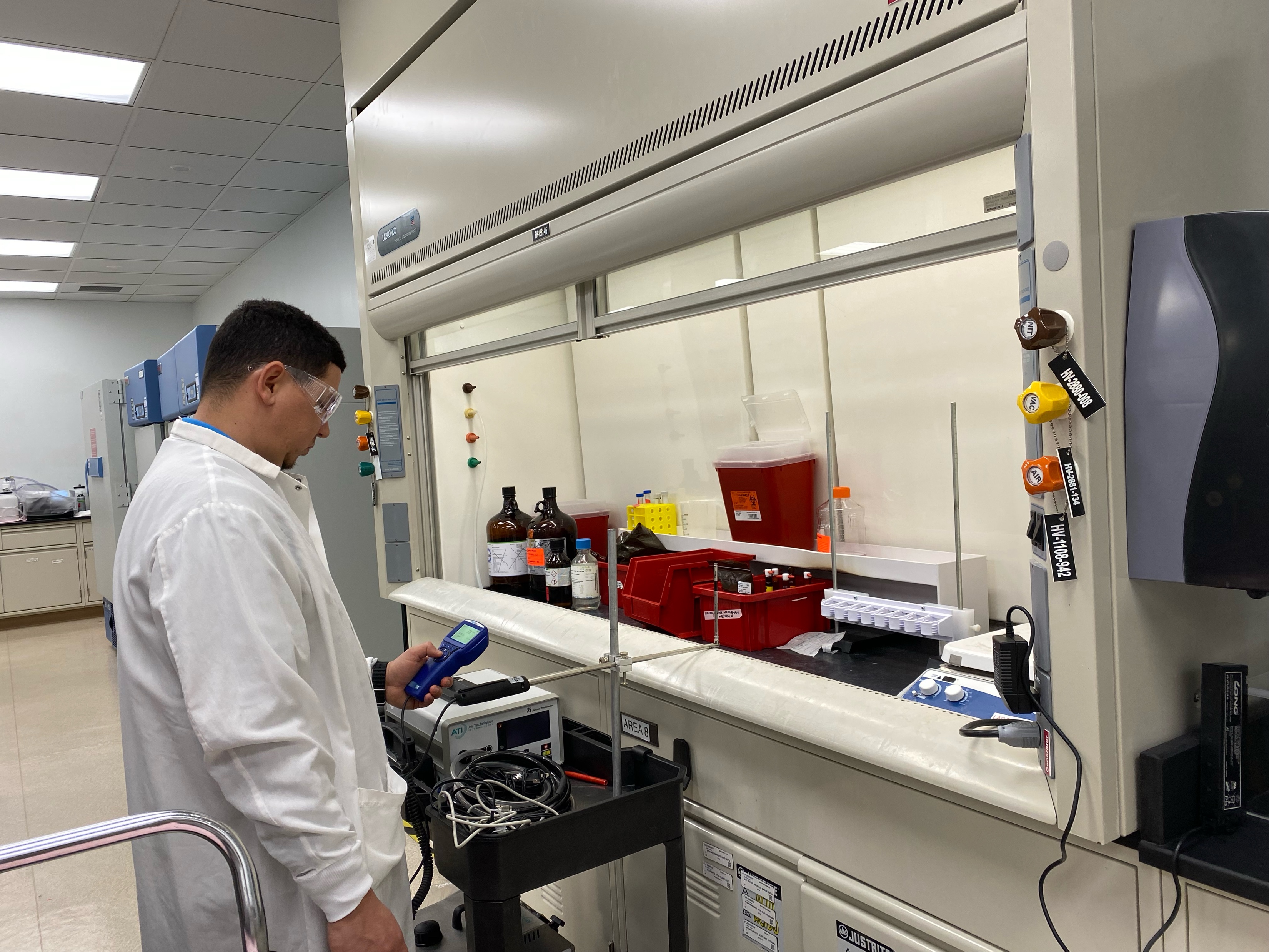

Kevin Bueno is a mechanical engineer whose experience includes pharmaceutical manufacturing, facility projects and maintenance. Before founding Micron, he worked within the kinds of environments the company now supports—coordinating systems, contractors, schedules and operational requirements where the consequences of poor performance were real.
That background shaped Micron’s approach: understand what the facility must accomplish, define the evidence required, measure the system in context and stay engaged long enough to help the customer reach a useful conclusion.
Many providers can collect readings or repair equipment. Micron’s advantage is understanding how installation, controls, airflow, containment and documentation affect one another.
We begin with the operational consequence: product quality, personnel protection, project turnover, reliability or regulatory evidence.
We use defined methods, calibrated instrumentation and traceable field conditions to establish what the system is actually doing.
When performance is deficient, our mechanical background helps separate symptoms from installation, controls, filtration or system causes.
Results are organized for the people who must act—owners, QA teams, engineers, commissioning providers and contractors.
Every facility has different risks and requirements. The discipline used to define, execute and close the work should remain consistent.
Clarify the facility, process, operating state, project documents and decision the work must support.
Agree on scope, methods, acceptance criteria, responsibilities, readiness and report expectations.
Perform the work with calibrated instruments while documenting conditions that could affect the result.
Evaluate deficiencies in the context of airflow, equipment, controls, filtration, room boundaries and operations.
Deliver understandable results, observations, corrective needs and retest status.
Remain available to support clarification, corrective work and verification when included in the scope.
Micron’s field and reporting practices are designed to create evidence that customers can understand and defend. The exact controls vary by service and contract requirements.
See project examplesNEBB-certified expertise is applied where the contracted discipline and reporting requirements call for it.
Applicable instruments are identified and maintained within a calibration program.
Methods, acceptance criteria and required deliverables are aligned before field work and reviewed during closeout.
Access, operating conditions, hazards and project prerequisites are addressed before mobilization.
Observed issues, responsible follow-up and retest status are documented so unresolved work remains visible.
Corrective work is not treated as complete until the appropriate performance check confirms the result.
Our mission is to create safer, more reliable critical environments through quality, expertise and dependable service—ensuring every space is ready for what matters most.
Micron is headquartered in Lexington and supports customers throughout the United States, Puerto Rico, the Caribbean and Latin America. Project coverage depends on scope, schedule, credentials and local requirements.